
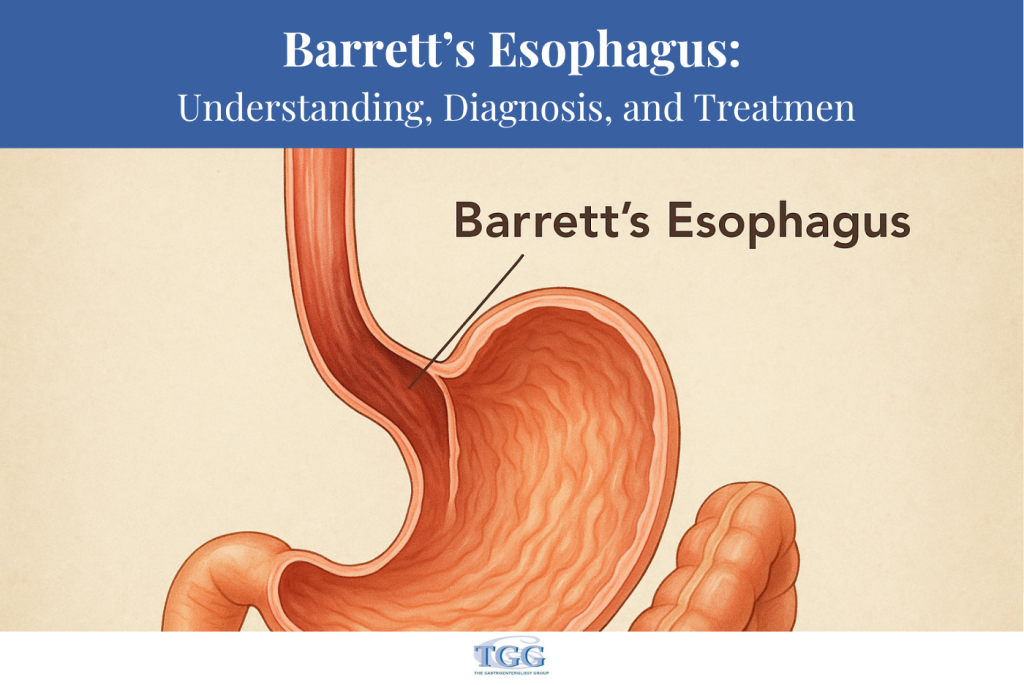
Barrett’s Esophagus is a condition in which the normal lining of the esophagus (the tube connecting the mouth to the stomach) is replaced with tissue similar to the lining of the intestine. This change typically occurs after years of chronic acid reflux or gastroesophageal reflux disease (GERD). Although Barrett’s Esophagus itself doesn’t cause symptoms, it increases the risk of developing esophageal cancer, making regular monitoring essential.
At The Gastroenterology Group, our specialists provide comprehensive evaluation, diagnosis, and management of Barrett’s Esophagus using the latest endoscopic technologies and evidence-based care.
How Barrett’s Esophagus Develops
Chronic exposure to stomach acid can irritate and damage the cells lining the lower esophagus. Over time, the body attempts to heal the damage by replacing normal squamous cells with more acid-resistant intestinal cells — a process called intestinal metaplasia.
This cellular change marks the presence of Barrett’s Esophagus and may progress from low-grade to high-grade dysplasia (precancerous changes) if not carefully monitored.
Who Is at Risk?
Barrett’s Esophagus most commonly develops in:
- People with long-standing GERD or heartburn
- Men over the age of 50
- Individuals who are overweight or obese
- Smokers or those with a history of tobacco use
- Patients with a family history of esophageal cancer
While not everyone with GERD develops Barrett’s, those with risk factors should be screened by a gastroenterologist.
Symptoms and Warning Signs
Barrett’s Esophagus itself doesn’t cause noticeable symptoms, but patients often experience signs of GERD, such as:
- Chronic heartburn
- Regurgitation of stomach contents
- Difficulty swallowing (dysphagia)
- Chest discomfort
- Unexplained cough or hoarseness
If these symptoms persist despite medication, a diagnostic upper endoscopy is recommended.
Diagnosis at The Gastroenterology Group
Barrett’s Esophagus is diagnosed through upper endoscopy and biopsy. During the procedure, your doctor examines the esophagus with a flexible camera and takes small tissue samples for analysis. The results determine the presence and severity of cell changes.
Regular surveillance is critical to catch dysplasia early, when it can be treated effectively before cancer develops.
Treatment Options
Treatment depends on the degree of cell changes found:
- Lifestyle changes and acid control: Weight loss, dietary modification, and medications (like proton pump inhibitors) help reduce reflux and inflammation.
- Endoscopic therapy: Techniques such as radiofrequency ablation (RFA), cryotherapy, or endoscopic mucosal resection (EMR) can remove or destroy precancerous tissue.
- Surgical options: In severe or advanced cases, surgery to strengthen the lower esophageal sphincter or remove damaged tissue may be considered.
The goal of treatment is to control reflux, prevent progression, and preserve healthy tissue.
Q&A: Barrett’s Esophagus
Q: Can Barrett’s Esophagus go away?
A: While the tissue change itself cannot revert to normal, treatments such as ablation can eliminate abnormal cells and prevent progression. Long-term reflux control is key.
Q: How often should I have an endoscopy?
A: Patients without dysplasia are typically monitored every 3–5 years. Those with dysplasia may need more frequent surveillance, depending on findings.
Q: Is Barrett’s Esophagus cancer?
A: No. Barrett’s is a precancerous condition, meaning it increases your risk of developing cancer, but most people with Barrett’s do not develop esophageal cancer.
Q: What lifestyle changes help manage Barrett’s?
A: Avoid late-night meals, reduce fatty or spicy foods, stop smoking, maintain a healthy weight, and elevate the head of your bed to reduce nighttime reflux.
Contact The Gastroenterology Group
Akron Location
690 White Pond Dr., Suite 300
Akron, OH 44320
📞 Phone: 330-869-0954
Massillon Location
6724 Wales Ave NW
Massillon, OH 44646
📞 Phone: 330-869-0954
At The Gastroenterology Group, we offer advanced diagnostic and therapeutic care for Barrett’s Esophagus to help protect your long-term esophageal health. Contact our Akron or Massillon office today to schedule your evaluation.